What Is a 3D Print Farm? Inside a 100-Printer Solar-Powered Facility
A 3D print farm is a group of 3D printers — anywhere from ten to several hundred — operated as a single automated manufacturing system. Instead of one machine making one part, a farm runs continuously: software assigns jobs to idle printers, finished plates swap automatically, and quality checks happen in-line. The result is injection-molding-scale output with zero tooling cost.
How a Print Farm Works, End to End
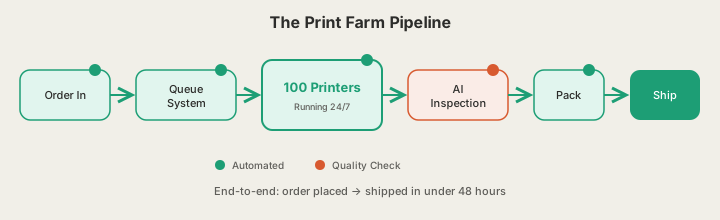
1. Orders Arrive from Three Directions
Our farm pulls jobs from the store (every desk clock and lamp is made to order), the custom print service (uploaded STL/OBJ/3MF files), and a REST API where hardware teams submit jobs programmatically.
2. Software Does the Scheduling
Farm management software tracks every machine's state — idle, printing, needs filament, needs maintenance — and packs incoming jobs onto plates for efficiency. No human decides which printer takes which job.
3. Printing Runs 24/7
Bambu Lab CoreXY machines printing at up to 500mm/s, with AMS units feeding multi-material jobs. Automated plate swaps mean a printer finishes, ejects, and starts the next job — overnight, weekends, without an operator.
4. AI Inspection Closes the Loop
Every finished print is checked by an AI-powered inspection system. Pass → packing. Fail → re-queue automatically. The failure never reaches a customer.
5. Pack and Ship
Most orders ship within 24–48 hours, with inspection photos included.
Print Farm vs. Other Manufacturing
| Single printer | Print farm | Injection molding | |
|---|---|---|---|
| Upfront cost | $300–$2,000 | $0 (use a service) | $5,000–$50,000+ mold |
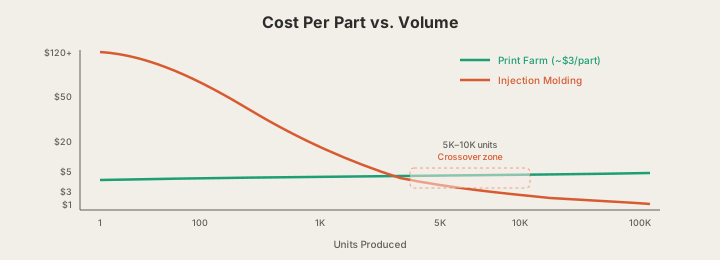
| Cost per part | Material + your time | Near material cost | Pennies (after mold) |
| First part ready | Hours | 24–48 hrs shipped | 4–12 weeks |
| Design changes | Free | Free | Re-machine the mold |
| Best volume | 1–10 | 50–10,000 | 10,000+ |
Why Solar Power Matters
Our farm runs on 100% solar energy. The obvious benefit is net-zero manufacturing. The less obvious: energy is a real input cost in 24/7 printing, and generating it on-site insulates pricing from grid volatility. Eco isn't a premium tier — it's the default.
Our Buildout, by the Numbers
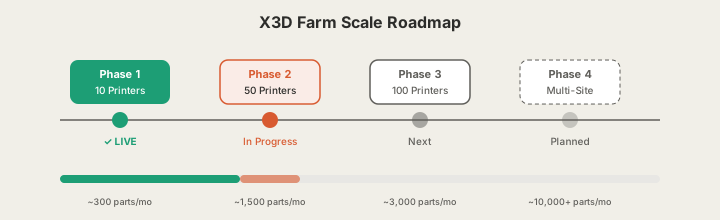
| Phase | Printers | Status | What it unlocks |
|---|---|---|---|
| 1 | 10 | ✓ Live | Store fulfillment + custom orders |
| 2 | 50 | In progress | AMS multi-color, auto plate swap, inspection AI |
| 3 | 100 | Next | Public API, white-label partnerships, bulk SLA |
| 4 | Multi-site | Planned | Regional US farms, faster delivery |
FAQ
How many printers make a print farm?
Automation is the real definition. Ten printers with job scheduling and auto plate swaps is a farm; fifty printers run manually is just a very tiring hobby.
How much does a print farm service cost per part?
By weight, at a transparent all-in rate. Small PLA parts run $1–6 each at our $0.12/g all-in rate.
How fast can a farm produce 1,000 parts?
Small parts across 100 high-speed printers: days, not weeks. A mold for the same part takes 4–12 weeks before the first unit exists.
Ready to get started?
Upload a 3D model for instant pricing, or generate one with AI.